
From local roots to regional reach: scaling social innovation in Southeast Asia
6 min
31 October 2025
Our journey so far reveals a region full of ingenuity — where social ventures are reimagining models for inclusive growth. It also underscores how scaling social innovation in Southeast Asia requires a distinct approach: one that blends business acumen with deep cultural context, patient capital, and systemic collaboration.
Since 2024, 100x has been deepening its commitment to supporting impact ventures in Southeast Asia and contributing to the growing social innovation ecosystem across the region. We’ve been working to deepen our understanding of the complex market contexts for social innovators and what enables and hinders them to scale. We’ve worked to map the landscape of social enterprises, engage ecosystem players and funders, and partner with our first set of outstanding ventures from Southeast Asia tackling issues around education and community skill building (Pandai, Solve Education) healthcare access (SwipeRx), and civic engagement (Think Policy) at scale.
100x supports social innovators to scale by offering financial, social and intellectual capital, backed by the London School of Economics. As a global funding platform and learning hub – we’re interested not only in supporting promising ventures from the region to scale their impact, but also building out relevant insights that propel the wider ecosystem to fund, strategise and grow more effectively. Our journey so far reveals a region full of ingenuity — where social ventures are reimagining models for inclusive growth. It also underscores how scaling social innovation in Southeast Asia requires a distinct approach: one that blends business acumen with deep cultural context, patient capital, and systemic collaboration.
Rooted in community, rich in innovation
Southeast Asia is home to an estimated one million social ventures1. They span diverse sectors from education and health to environment and financial inclusion but share a defining feature—they are deeply grounded in community realities. Our market landscaping shows that the majority of them are small enterprises rooted in specific communities and are established to solve local problems with deep contextual expertise, making it challenging (and sometimes undesirable) to scale.
Some have impact models that are more scalable or replicable between contexts. They tend to integrate technology as an enabler, not as an end in itself, using simple digital interfaces, mobile platforms, and localised content to reach underserved populations cost-effectively. These ventures often emerge from founders who have deep lived experience of local issues — educators, health professionals, community organisers. They design solutions that are context-responsive, affordable, and inclusive. Their focus on tangible outcomes and user trust makes their impact immediate, with larger potential for scale. Ventures in the 100x portfolio are all led by values-driven teams who combine professional credibility with a deep understanding of their local ecosystems.
For example, Solve Education, one of 100x’s portfolio ventures, is a hybrid social enterprise that provides AI-driven, gamified education to underserved youth through its free learning platform, Ed the Learning Bot (Edbot.ai). The platform offers foundational and employability courses—including literacy, numeracy, financial literacy, and STEM—through interactive lessons accessible on low-bandwidth web browsers, making it suitable for learners with limited digital access. The Solve Education model combines technology-enabled learning with community-based engagement, using youth ambassadors and local partners to build and sustain learning communities that meet both online and offline, remaining deeply relevant to learners’ needs while scaling across Indonesia, Malaysia, and other Southeast Asian markets, reaching over 940,000 users.
False dichotomy between commercial vs impact-first
Across the region there is no clear delineation between ‘impact-first’ and commercial ventures. Many adopt commercial or revenue generating models to grow though are inherently servicing the common good by providing essential products or services to underserved populations and are therefore impactful. Our market landscaping shows that not all of these ventures identify or register legally as ‘impact-first’ or ‘social’ ventures and some are not connected into the impact ecosystem, perhaps due to lack of clear incentives to encourage businesses from identifying as impact ventures. There is a common misconception among commercial lenders and investors that mission-driven organisations are inherently riskier as they might forego scaling the business to drive impact.
So, does the legal structure of the venture matter for driving scale? Yes and no. Yes, in that the intention to drive positive impact should be inherent as the venture scales. No, in that impactful models can take different organisational forms – from for-profit to not-for-profit models to anything in between. This suggests a huge opportunity to learn from commercial models delivering impact in the Southeast Asian context and what drives their ability to scale with intention. Ventures from the region selected for the 100x programme each combines a clear social purpose with a robust business model capable of generating earned revenue and sustaining growth.
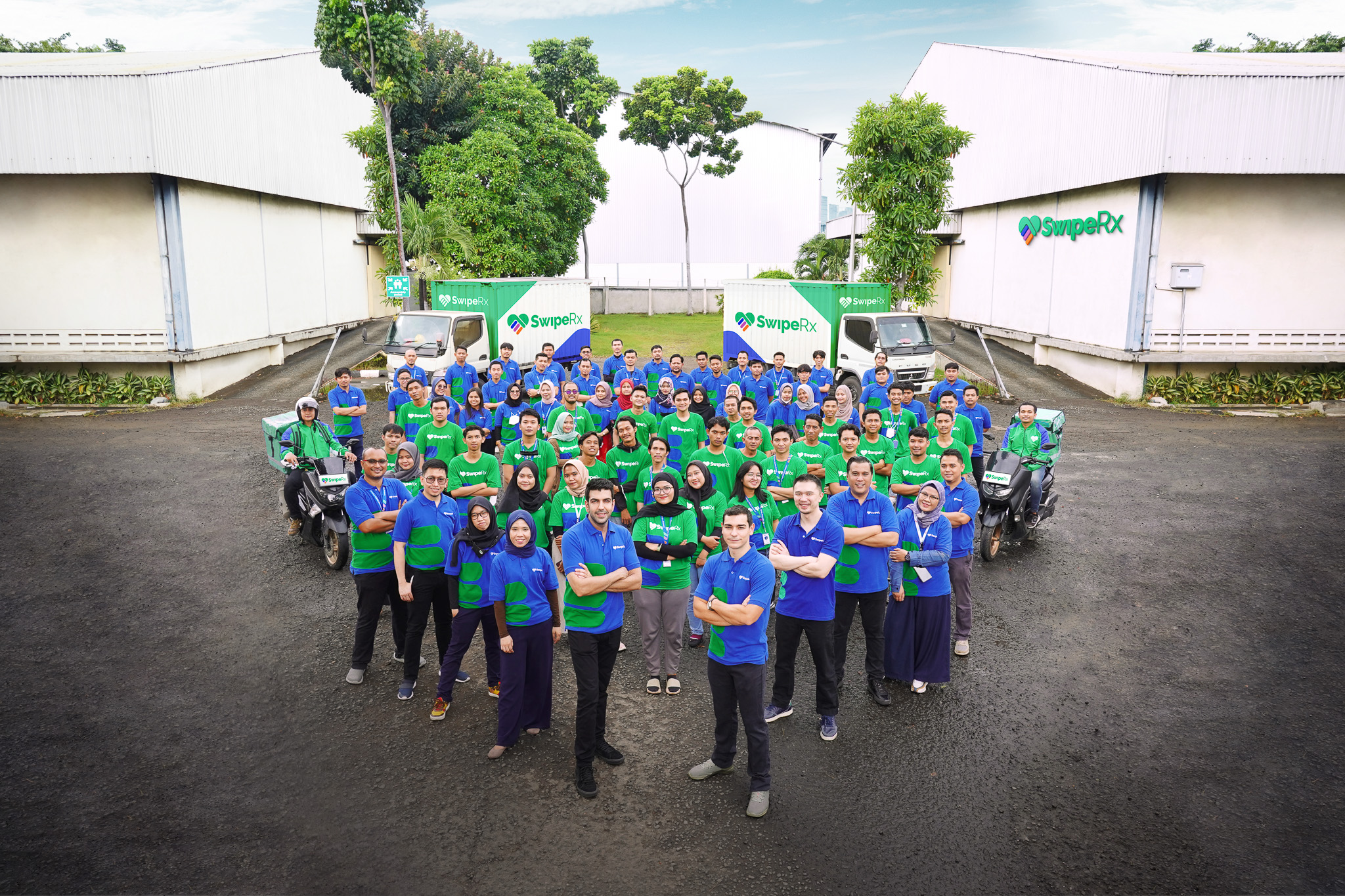
An example from the 100x portfolio is SwipeRx, a for-profit venture that serves as Southeast Asia’s largest digital pharmaceutical platform, aggregating orders from independent pharmacies to secure bulk discounts from manufacturers while also providing free, accredited online training to over 120,000 pharmacy professionals across the region. The company’s commercial model—anchored in wholesale revenue and planned expansion into a women-led retail pharmacy chain (Apotek Inofarma) targets underserved peri-urban and rural communities in Indonesia with affordable medicines, exemplifies how market-based models can deliver public good outcomes while sustaining long-term financial growth.
There is a common misconception among commercial lenders and investors that mission-driven organisations are inherently riskier as they might forego scaling the business to drive impact.
Markets are maturing, but barriers to scaling remain
Southeast Asia is home to 10% of the world’s population2, a large proportion of which are bottom or middle-of-the-pyramid, presenting a huge opportunity for social innovations to have an impact at scale. However, ventures that originate in one Southeast Asian market face many challenges to scaling into new markets in the region given the differences in economic, political, linguistic and cultural differences. Scaling social innovation models is more prevalent across the larger, more established markets like Indonesia and Malaysia, emerging in the Philippines and Thailand and more challenging in Vietnam, Cambodia and Laos. Our landscaping suggests that most markets in the region lack dedicated legal structures or tax incentives for social ventures or enterprises, though Thailand and Malaysia show positive policy evolution to encourage social enterprise growth.
Accessing the right type of financing and strategic support for social innovators to scale remains one of the biggest hurdles in the region. Seed grants under USD100K are accessible through CSR and philanthropy, but very few social ventures can secure the “missing middle” financing between USD200K – 1M+ to get to the next level of growth.
The capital expenditure needed to set up physical and human infrastructure in new markets is hard to come by. Commercial capital, where available, often carries prohibitive rates or rigid expectations of returns. Access to philanthropic and impact investment capital from the region is growing but is very focused on specific issues or types of models and capital flows remain largely domestic, constraining regional expansion and replication. Some regional initiatives are forming to catalyse impact investment and blended finance into new innovative financing and investment vehicles across the region – an effort that 100x intends to support to build a supportive financial ecosystem for scaling social innovations.
Another challenge that ventures in the region face is measuring and defining their ultimate impact with adequate rigour. Many ventures track reach, not outcomes, and lack the resources or expertise to quantify their social or environmental value. But the prevalence of commercial models with strong impact potential provides an opportunity to bridge the divide, particularly when it comes to strengthening their capacity to measure their impact, deliver a compelling impact narrative and build connections that can better position them for fundraising, particularly in the philanthropy and impact investing space. This is a strong focus of the 100x accelerator programme which supports ventures with both scaling strategy and impact measurement.
Accessing the right type of financing and strategic support for social innovators to scale remains one of the biggest hurdles in the region.
A distinct pathway to scale?
Southeast Asia’s social innovators are rewriting what scale means for their regional context, balancing innovation with inclusion, ambition with empathy, and growth with community groundedness. In some cases, hypergrowth or scale by breadth isn’t always the goal, nor should it be. In others there are opportunities to scale impact innovations by replication or partnerships rather than growing incrementally, presenting an opportunity for us to learn more about the enablers and deterrents with a regional lens.
The region’s diversity — in economic markets, political governance, and social and environmental challenges — is not a constraint but a strength. It offers fertile ground for experimentation, partnership, and learning that can inform global strategies for equitable growth. For 100x, supporting these innovators means more than funding ventures. It’s about growing a regional movement for evidence-based, scalable social change.
For bold, ambitious ventures who are radically tackling pressing social or environmental issues in Southeast Asia, applications for 100x’s upcoming 2026/27 cohort are open now until 10th November 2025.
For those operating in the social innovation ecosystem in Southeast Asia more broadly, we welcome opportunities to partner and contribute to your efforts. Connect with Shanzeh Mahmood on LinkedIn or email us at hello@100ximpact.org