

Overview
Supporting early childhood development through caregivers, play and public systems
Highlights
130k
Mothers trained to run educational play sessions and provide nurturing care at home
700k
Children reached across Ghana and Uganda


The problem
More than 250 million children globally lack access to adequate early childhood development support, with the greatest gaps in low-income and rural communities. In some contexts, public early childhood education is absent altogether; in others, classrooms are overcrowded and teaching quality is uneven. At home, many caregivers lack the support, confidence or practical tools to help young children learn through play.
The solution
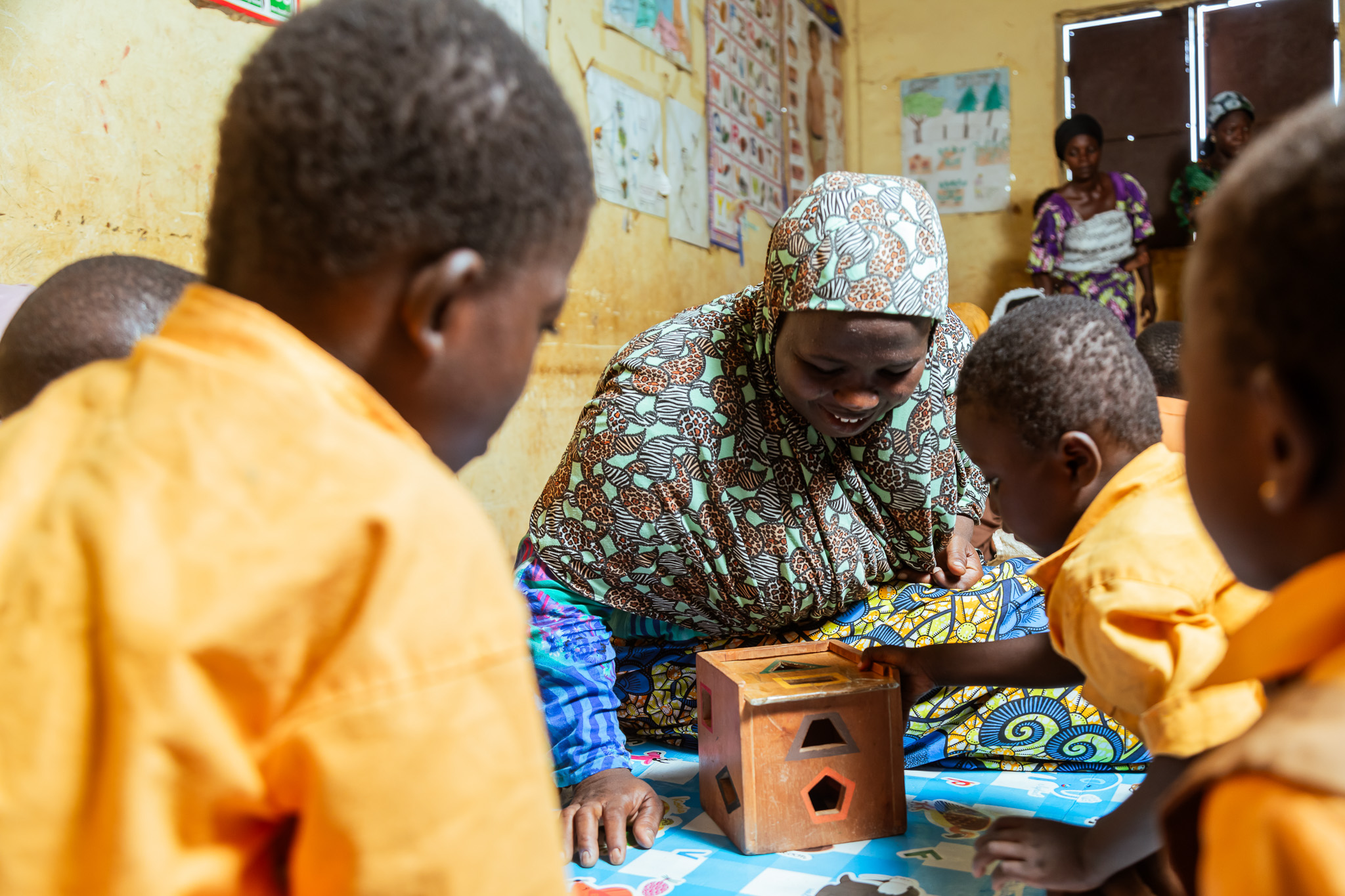
Lively Minds delivers structured, play-based early childhood support through caregivers and public systems. Its model trains government trainers, teachers and caregivers to run play schemes in schools and provide nurturing care at home, with radio programming reinforcing key messages in local languages. In Ghana, the model has been embedded into the public pre-primary system, while in Uganda it works through community structures where public early childhood education is more limited.
The insight
Lively Minds shows the potential of a low-cost, caregiver-led model that governments can adopt and sustain. Its next phase is about testing lighter-touch technical assistance and media-supported delivery models that could expand into new geographies while preserving quality, local relevance and measurable gains in children’s development.