

Overview
Digital tools co-designed with frontline health workers and government partners to strengthen data use and close feedback and referral loops in India’s public health system
Highlights
75k
Community health workers and 1000 health officials onboarded on Khushi Baby’s digital health platform
50m
Patients screened, with 6.8 million flagged as at-risk
33%
Reduction in time community health workers spend on data entry, freeing time for care delivery


The problem
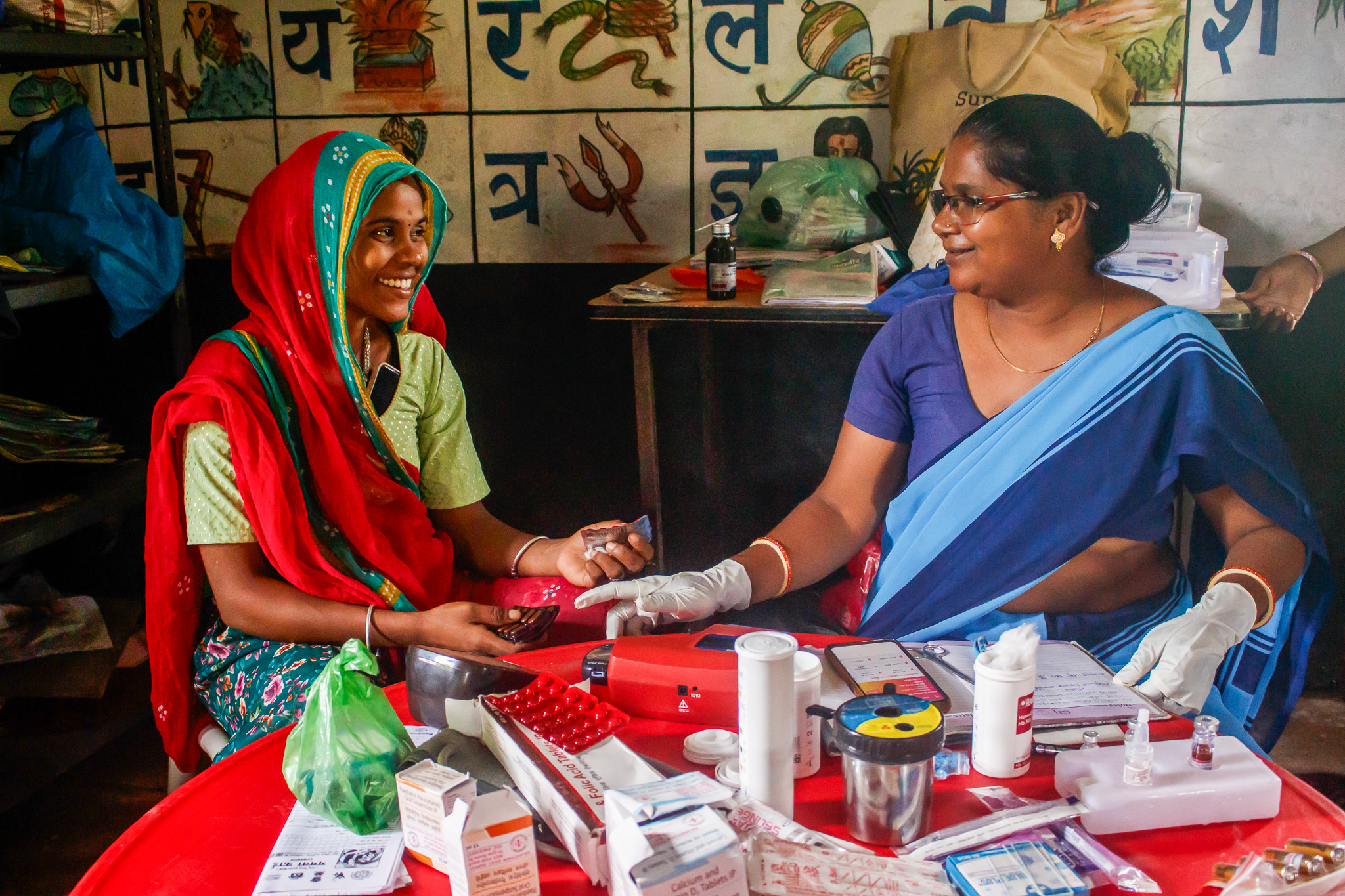
1.5 million Community Health Workers (CHWs) are the first line of care for nearly a billion people in India. CHWs track pregnancies, deliver vaccines, monitor disease outbreaks, and connect patients to higher levels of care. But instead of focusing on patients, CHWs spend over 50 hours each month on redundant data entry–juggling paper registers and siloed apps to feed fragmented, delayed, and often inaccurate reports. This broken information system has ripple effects. Health officials cannot see who needs care, where diseases are spreading, or which communities are being left behind. The result: missed cases, preventable deaths, and a public health system unable to act on the right data at the right time.
The solution
Khushi Baby’s Community Health Integrated Platform (CHIP) equips Community Health Workers (CHWs) with a co-designed, offline-first mobile app that streamlines data entry across programs, from maternal care to tuberculosis and non-communicable diseases into a unified system. A WhatsApp-based AI chatbot offers real-time clinical guidance, while an integrated data quality monitoring system with supervisory support flags inaccurate entries to strengthen the reliability of field data. With CHIP now embedded within government systems, Khushi Baby is advancing toward real-time decision-making through predictive analytics and a “data for action” framework that democratizes data use. CHWs can see the impact of their work, while health officials access simplified insights to inform policy shifts, resource allocations, and program improvements.
The insight
With formal partnerships at state level, Khushi Baby has proven it can embed digital tools within public systems. Its next phase prioritises scaling CHIP to 115,000 CHWs across three states by 2027, expanding adoption among health officials, and positioning CHIP as a digital public good that strengthens healthcare systems nationwide. The platform is projected to impact 100 million individuals in the next 3 years.