

Overview
Accelerating timely justice with AI-enabled courtrooms
Adalat AI
4k
Live across 4,000 courtrooms in 9 Indian states
50%
30-50% Reduction in case timelines
20k
The organisation plans to expand to cover all 20,000+ courtrooms in India by 2028.

The problem
India’s judicial system is overwhelmed. With over 50 million cases pending, it would take more than 300 years to clear the backlog at the current pace. Cases often drag on for more than a decade, contributing to one of the world’s highest proportions of under-trial prisoners—76% of India’s prison population. Shortages of skilled stenographers, reliance on disorganised paper files, and language barriers compound these delays. The result is a slow and inaccessible justice system that prolongs human suffering, trapping families in cycles of poverty and uncertainty.
The solution
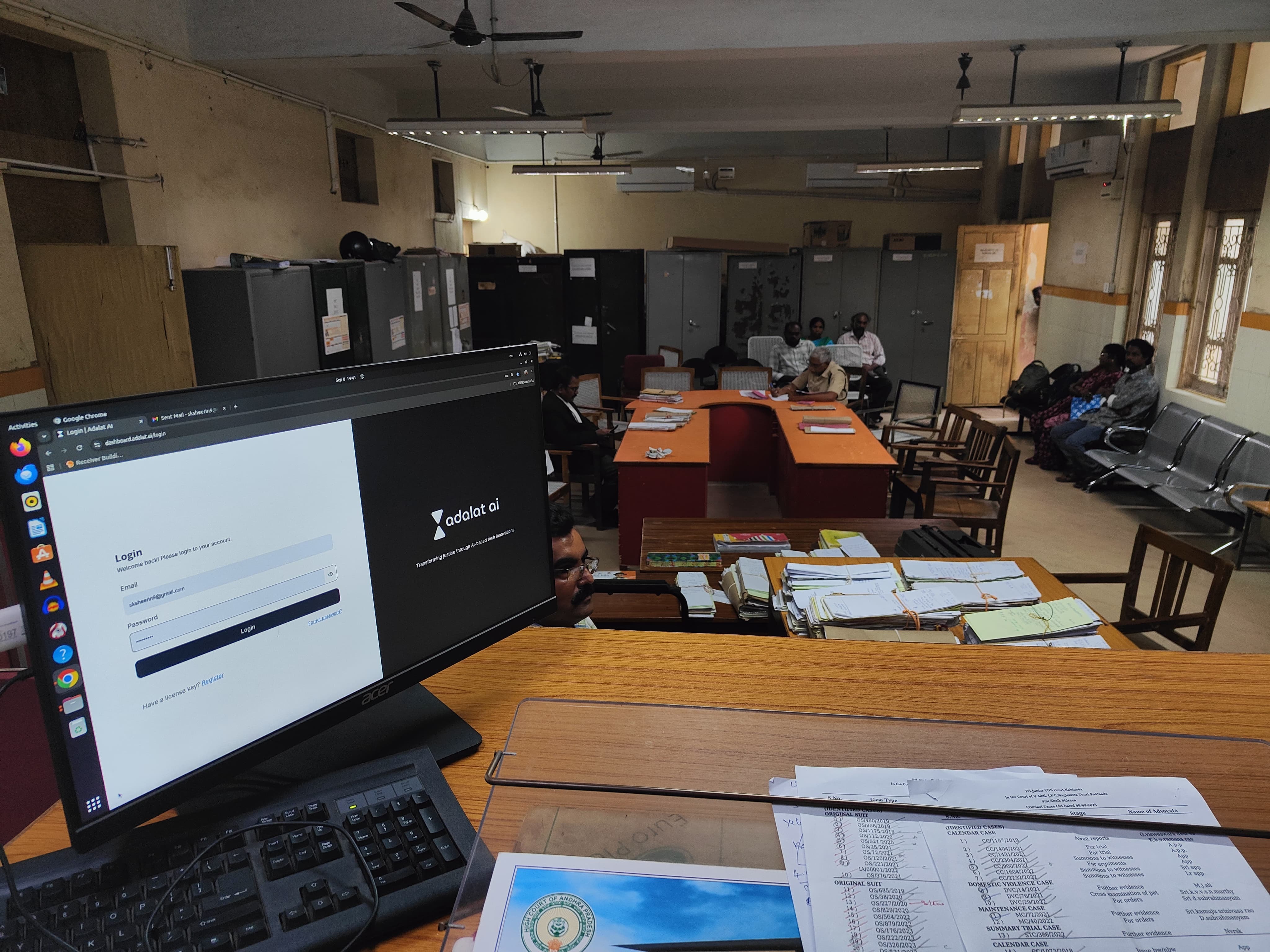
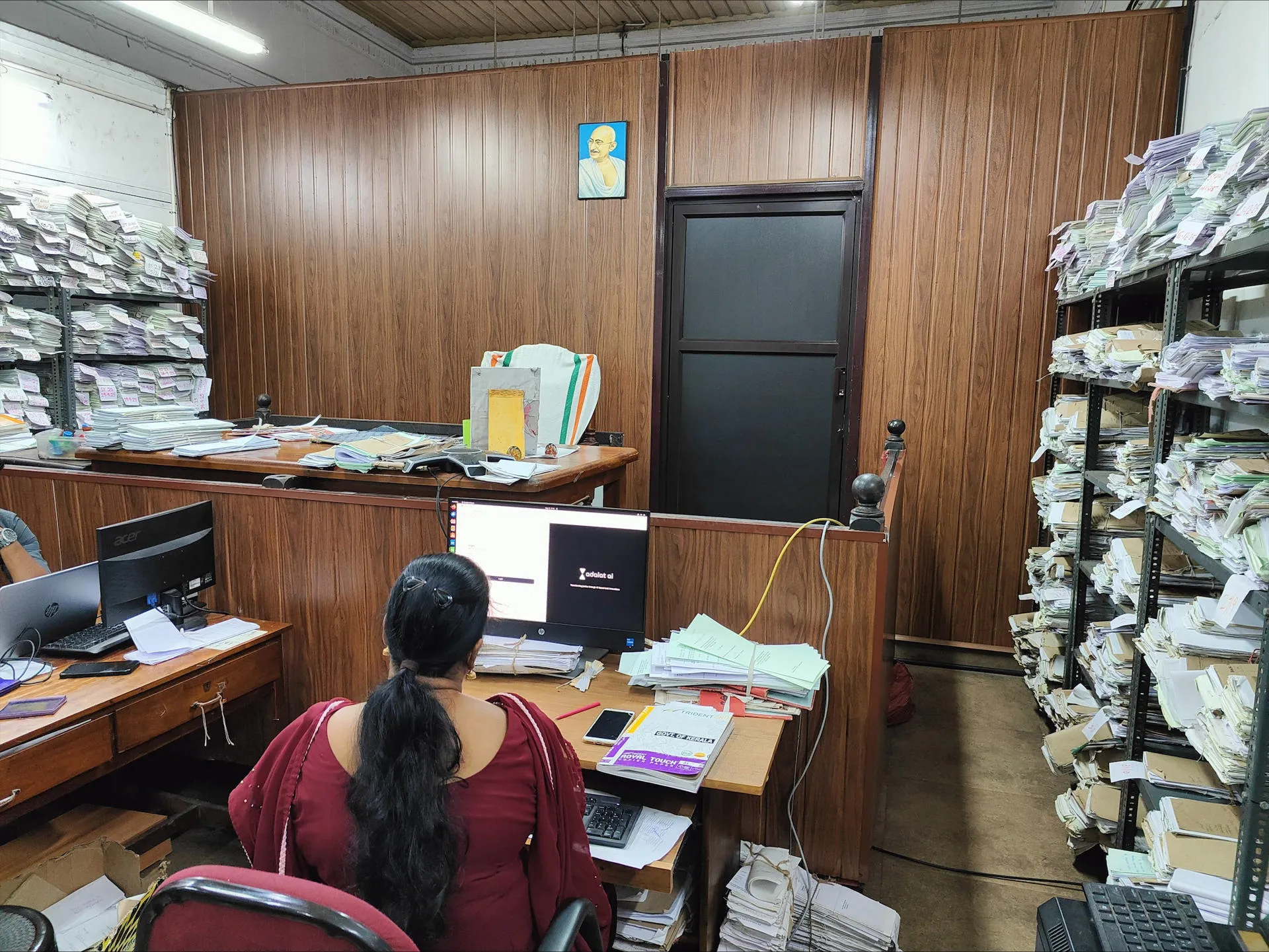
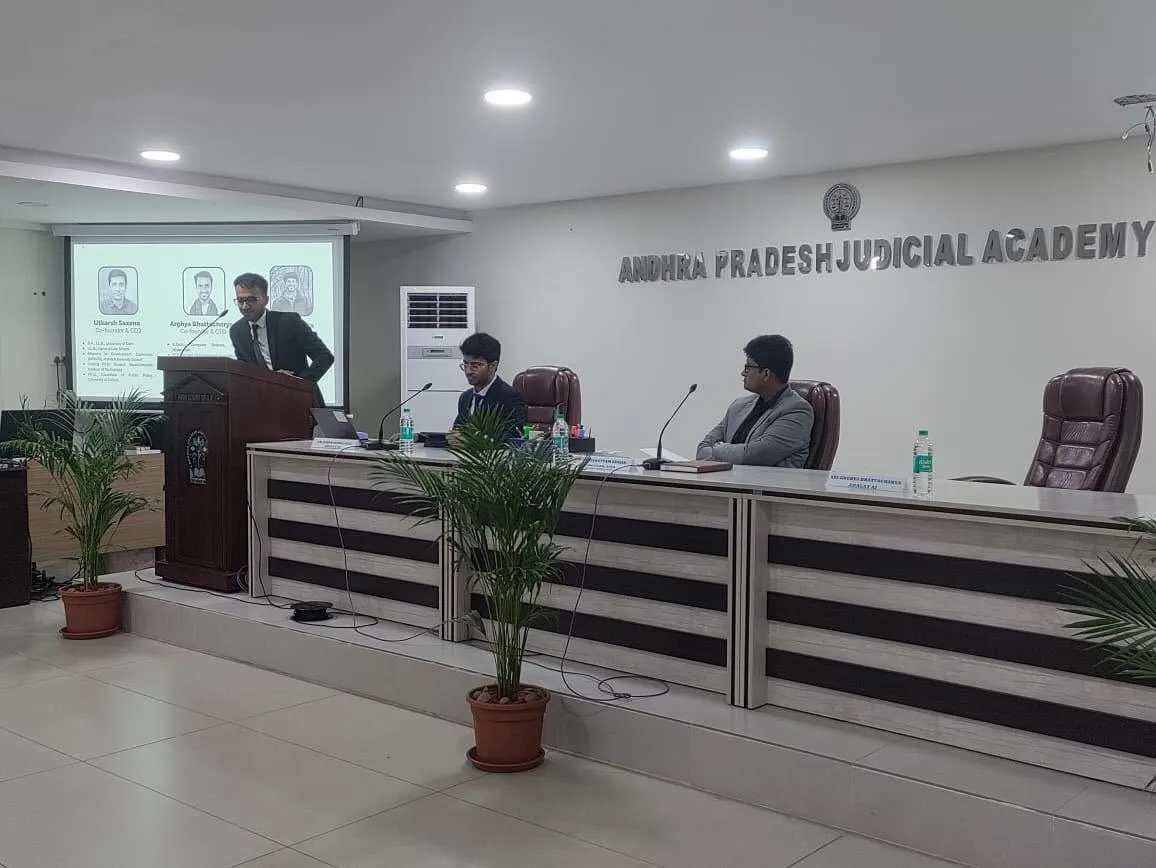
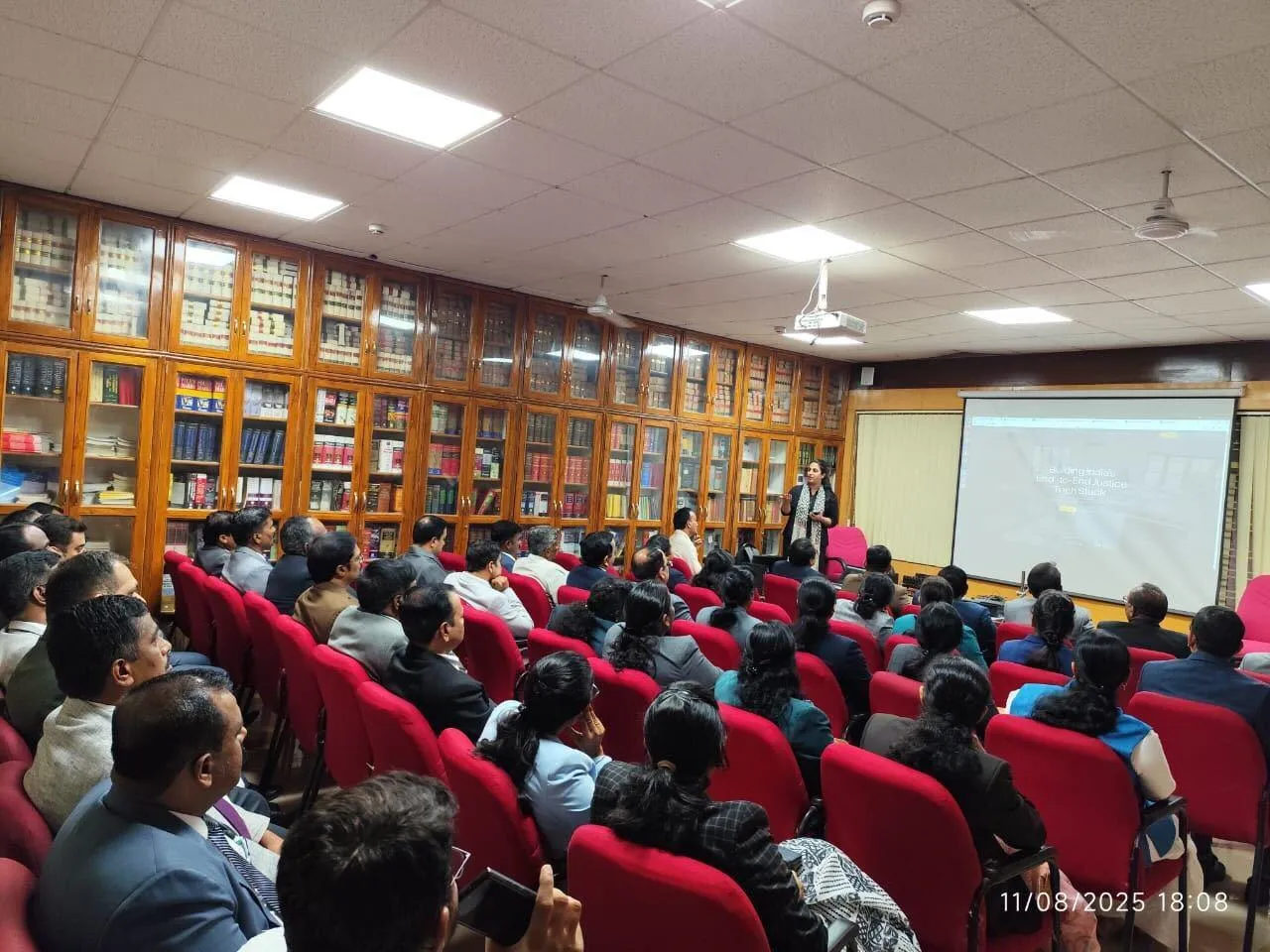
Adalat AI brings artificial intelligence into the heart of the courtroom to streamline judicial workflows and speed up case resolution. Its real-time transcription software recognises multiple Indian languages, regional accents, and legal jargon, capturing spoken arguments and judgements with high accuracy. Alongside this, it offers a case flow management system that automates scheduling and document preparation, a digitisation tool that turns paper records into searchable files, and a translation engine trained on legal texts. Adalat partners with State High Courts for top-down adoption and trains judges and clerks through judicial academies.
The insight
In less than two years, Adalat AI has transformed from a research experiment into a fast-scaling justice innovation. Its model is already achieving state-wide penetration in Kerala, Karnataka, Andhra Pradesh, and Bihar and is expanding rapidly across India, with international pilots in Ghana, and discussions underway in Kenya and Zambia. Today, it reaches 20% of India’s judicial system and is beginning to get integrated and mandated into official judicial systems and processes. Looking ahead, the organisation plans to expand to cover half of India’s courtrooms by 2025 and all 20,000+ courtrooms by 2028.